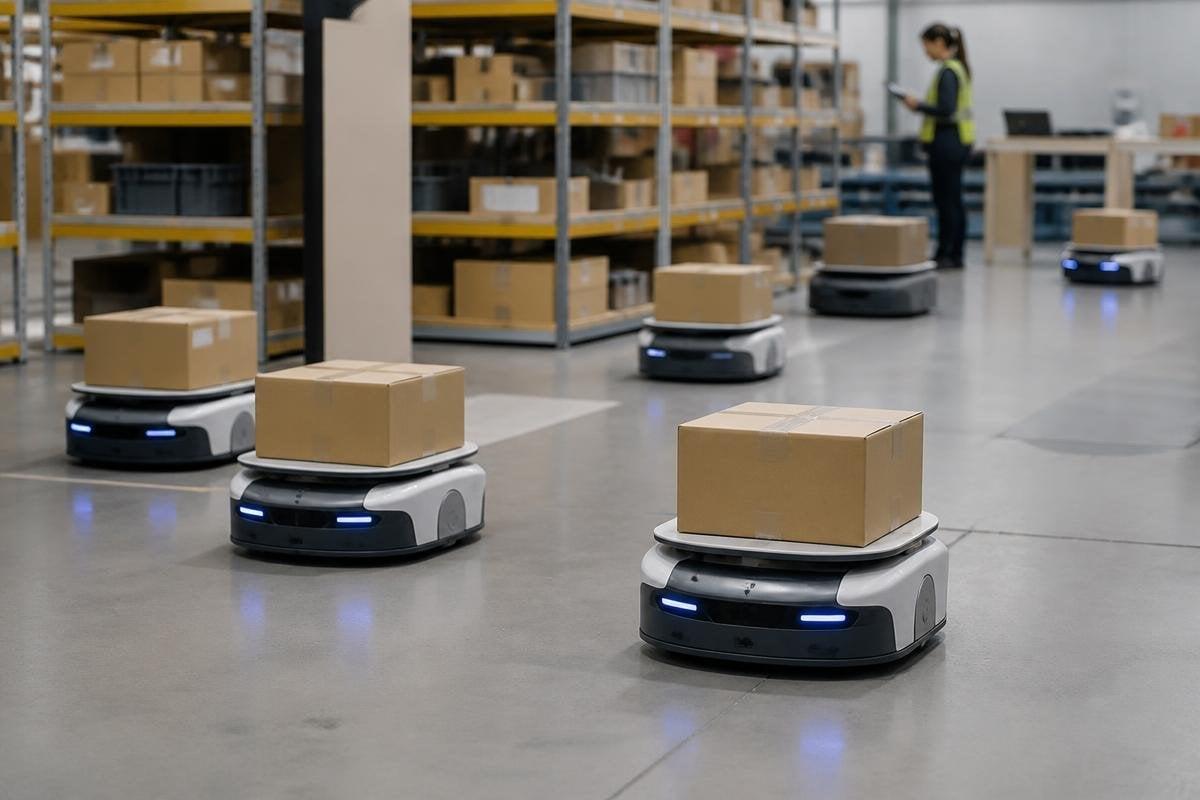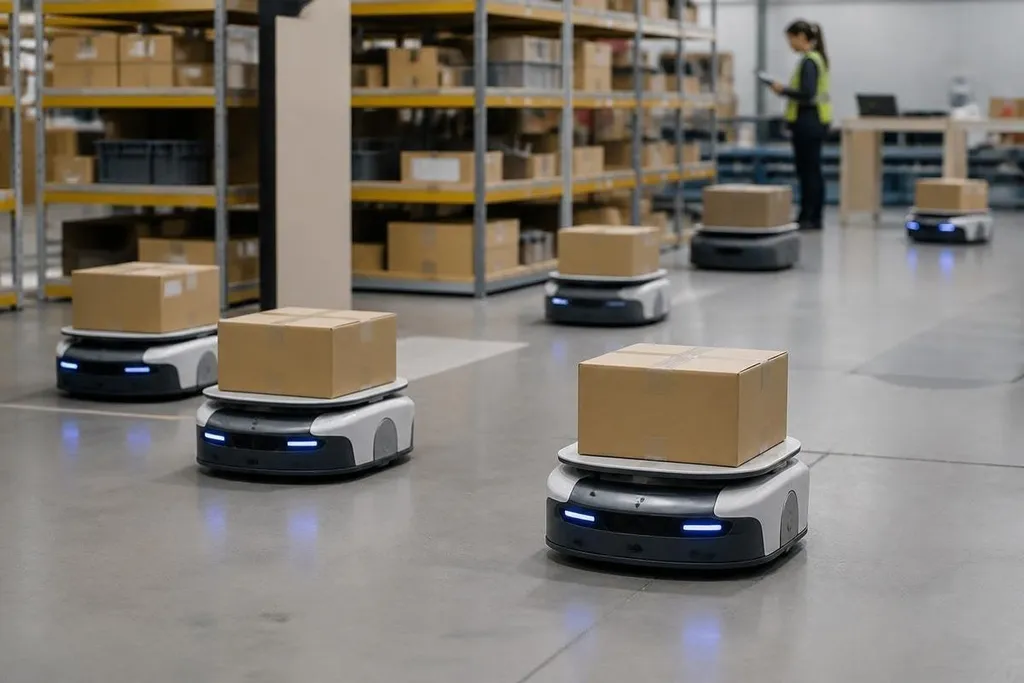
A fleet of swarm robots can keep working after one unit stops, because the task is shared across many machines. That makes the idea useful for warehouses, farms, mines, and inspection work, though the job must be split into small actions first.
- Each robot follows local rules and reports its position.
- The fleet can send another unit when one loses power or hits an obstacle.
- Charging, radio links, and traffic control set the real limits.
What a swarm actually does
More than a group of robots moving at once, a swarm needs rules for who takes a task, where each robot can move, and how the group reacts when conditions change.
One robot may scan a section of floor with LiDAR, which measures distance with laser pulses. Another may carry an item. A fleet manager can assign new work when the first robot finishes, stops, or loses its link.
The machines don't need a full plan for the whole building at every moment. Each one can make a short move based on nearby robots, open routes, battery level, and the task list.
That cuts the amount of planning held by one controller, though it adds rules for safe movement. The result suits work spread across a large area.
A single robot waiting for a blocked aisle can hold up its next job. With several units available, another robot may reach the same point by a different route.
Where the savings may come from
The clearest gain comes from repeated work with a simple handoff. Floor scanning, stock checks, crop inspection, and small deliveries all break into jobs that can move between machines.
A fleet can also grow in stages. You may begin with a small group, measure where the delay sits, then add robots to that part of the process. That only helps when the software, charging points, traffic rules, and work area can handle the extra machines.
The savings depend on the whole task. If robots finish their routes quickly but wait beside one charger, the charger sets the pace. If every unit needs a remote operator, the labor cost moves from driving machines to managing exceptions.
A short swarm demo leaves out the work between runs. Dated swarm robotics reports from Robot24.com can put company claims beside named machines, task results, and stated limits. That gives the next section a better starting point: the hard parts are outside the demo.
The hard parts are outside the demo
Communication is the first weak point. Robots need enough radio coverage to share location, task, and safety data. A dead zone can leave a machine with old instructions or force the fleet to stop.
Charging creates a second limit. Small robots may need less energy per unit, yet a large fleet still needs a clear charging plan. Batteries, docks, spare units, and shift timing all affect whether the group keeps working.
Traffic is harder as the number of robots grows. A narrow aisle can become a queue, especially when machines carry loads or must stop for people. The software needs rules for right of way, safe speed, emergency stops, and recovery after a fault.
The work itself also has to be predictable. A swarm may handle many small objects in marked locations, while a mixed pile of damaged goods can force frequent human help. I’d wait for measured task results before buying a swarm for work with many unknowns.
A buying checklist
Use these questions before you compare fleet prices:
- Name the task: Can each job be described with a clear start point, end point, load, and success test?
- Count exceptions: What happens when an item is missing, a route is blocked, or a person enters the work area?
- Check the link: Does the radio network cover every work zone, including lifts, metal rooms, and outdoor sections?
- Plan charging: How many docks are needed, where will they sit, and what happens during a long shift?
- Measure control work: How many people will watch the fleet and fix failed tasks each day?
- Set a stop rule: Which result, such as missed handoffs or repeated safety stops, ends the trial?
A swarm can change a site when the work is spread out, repeatable, and easy to check. The next proof is still practical: a named deployment must show how many robots ran, what task they completed, how often people stepped in, and what the fleet cost to operate.